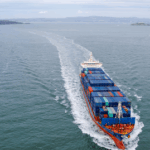

With significant changes shaping the maritime industry, stricter rules and regulations on emissions, decarbonisation, and the post-pandemic global economic recovery are deeply affecting how new vessels are designed and built. Requests for eco-friendly ships, green tech-enabled vessels, and high-performance cargo ships have increased, and Asia, led by China and South Korea, is once again at the forefront of this global surge in production.
That raises a fundamental question for shipowners: Which shipyards provide the best value in 2025, and how can shipowners be confident that their projects will be delivered as ordered, on schedule, and on budget?
In this article, we take a closer look at the top five shipyards at the forefront of the commercial newbuild market and discuss why new building supervision firms, such as Risk Design International, are ideally placed to provide shipowners with independent guidance, transparent project oversight, and cost-effective supervision.
The Global Shipbuilding Landscape in 2025
Three forces are shaping the structure of the world’s shipbuilding industry in 2025: geopolitics, the green transition obligations, and technologisation. Not only has this changed where ships are built, but also how they are built, and what shipowners can now expect from the process.
A Post-Pandemic Boom and Structural Shifts
It also suffered a significant slowdown, which reversed in 2023–2024. The normalisation of global trade, the boom in container demand, and the urgency to replace ageing fleets with fuel-efficient ships prompted the shipyard revival.
Now, in 2025, many shipowners are accelerating fleet expansion to meet:
- IMO 2023 and the upcoming 2026 GHG intensity regulations
- Decarbonisation pledges by charterers and financiers
- Higher demolition of vessels older than 20 years because of CII (Carbon Intensity Indicator.
According to Clarkson’s Research, the worldwide order book is the largest we’ve seen since 2008, with more than 3,800 commercial vessels either on order or under construction, free on board, including container ships, bulk carriers, gas carriers, and tankers.
Why Asia Remains the Epicentre of Shipbuilding
Although Europe still excels in niche and defence-related shipbuilding, commercial shipbuilding is now heavily concentrated in Asia, specifically in China, South Korea, and Japan.
Country-by-Country Snapshot:
| Country | Global Share of Orders (2024) | Key Strengths |
| China | 50–55% | Cost-effective mass production, bulkers, containerships, LNG |
| South Korea | 25–30% | LNG carriers, offshore units, VLCCs, cutting-edge tech |
| Japan | 7–10% | Mid-sized chemical tankers, short-sea vessels, declining share |
China: Quantity and Growing Technical Competence
China’s shipbuilding strategy is state-led and export-driven. Home to the largest order book by volume, Chinese shipyards have mastered standardisation, modular construction, and digital project management systems.
Key Chinese yards are focusing on:
- Dual-fuel vessels (LNG, methanol, ammonia-ready)
- Domestic LNG carrier programmes
- Ammonia and hydrogen fuel system integration
- Autonomous navigation support systems
In addition, Chinese shipyards are increasingly working with foreign classification societies to improve their appeal to Western shipowners.
🇨🇳 Strategic Insight: China’s rapid advancement in green propulsion and classification-compliant builds makes it a cost-effective yet viable option even for technically advanced projects, if supervision is robust.
South Korea: Quality, Precision, and Green Tech Leadership
South Korea’s shipbuilding sector focuses on high-spec, high-value vessels. This includes:
- LNG carriers (especially ME-GI/DFDE propulsion types)
- Floating storage and regasification units (FSRUs)
- Methanol-ready containerships
- Carbon capture-ready tankers
South Korean yards like HD Hyundai, Samsung HI, and Hanwha Ocean offer:
- Advanced ship design centres
- Long-standing relationships with European and North American shipowners
- Deep experience in working with Western class societies (DNV, Lloyd’s, ABS)
- Proven track record of delivering on time, within budget
In 2025, Korean yards continue to secure contracts at premium rates, justified by quality, technological sophistication, and low defect rates. However, backlogs and long lead times remain a concern.
🇰🇷 Strategic Insight: Shipowners looking to invest in advanced vessels—especially LNG—view South Korea as the gold standard. Yet due to complexity and long cycles, independent supervision ensures contractual compliance and schedule discipline.
Emerging Alternatives: Vietnam, India, and Turkey
While China and South Korea dominate, smaller Asian and Eurasian shipbuilding nations are gaining traction, especially for regional or coastal vessels, ferries, and offshore support ships (OSVs).
- Vietnam: Growing in offshore wind vessels and jack-up rigs.
- India: Recently increased state funding for naval and small commercial ships.
- Turkey: Strong in niche segments like tugs, ro-ro ferries, and fishing vessels, especially for European clients.
However, most of these countries cannot yet match China or South Korea in terms of:
- Throughput
- Green technology readiness
- Yard automation
What Shipowners Are Prioritising in 2025
Across geographies, the shipowners’ priorities are remarkably aligned in today’s climate:
| Priority | Description |
| Regulatory Compliance | CII, EEXI, EU ETS readiness, and IMO Tier III emissions standards |
| Fuel Flexibility | LNG dual-fuel, methanol-ready, ammonia-capable, biofuel compatibility |
| Digitalisation | Remote monitoring systems, smart maintenance, digital twins |
| Delivery Assurance | Avoiding delays in tight markets with contractual enforcement |
| Lifecycle Cost Control | Minimising total cost of ownership (TCO) via efficient designs |
This confluence of environmental, financial, and technical concerns makes project-level supervision more important than ever, especially in overseas builds where communication, compliance, and quality need close tracking.
Why the Role of Supervision Firms Has Expanded
In this global context, ship new building supervision is no longer just about “checking the welds.”
It now encompasses:
- Regulatory navigation: Ensuring compliance with changing environmental rules from IMO and regional bodies.
- Project arbitration: Mediating between the client and the yard to keep progress on track.
- Real-time transparency: Offering instant updates to technical directors and stakeholders across continents.
- Risk mitigation: Detecting quality issues or spec deviations early to avoid costly refits post-delivery.
As shipowners increasingly work with Asian shipyards from bases in Europe, Africa, or the Americas, the language, legal systems, and working styles differ significantly, amplifying the need for expert supervision that bridges both cultures and technical expectations.
Top 5 Commercial Shipyards in 2025 (China and South Korea)
We’ve selected the five most influential and active yards based on delivery capacity, order book size, vessel specialisation, innovation, and strategic value to shipowners.
1. Jiangnan Shipyard (China)
Location: Shanghai
Specialty: LNG carriers, VLGCs, eco-friendly tankers
Why It’s a Top Pick
Jiangnan, a subsidiary of China State Shipbuilding Corporation (CSSC), has quickly become a global powerhouse for LNG and LPG carriers. The shipyard is now deeply engaged in producing low-carbon vessels, including ammonia-ready tankers and dual-fuel ships.
Recent Developments
- Delivered multiple VLGCs (Very Large Gas Carriers) to Japanese and European clients.
- Integrated a high-capacity production line using digital twin technology.
- Expanded collaborations with classification societies for regulatory compliance in Europe and the U.S.
Considerations for Shipowners
- Advanced engineering capabilities make Jiangnan ideal for complex gas carriers.
- Language and contract clarity issues necessitate strong third-party supervision.
2. Hudong-Zhonghua Shipbuilding (China)
Location: Shanghai
Specialty: LNG carriers, ultra-large container vessels (ULCVs)
Why It’s a Top Pick
As of May 2025, Hudong‑Zhonghua has delivered approximately 50 LNG carriers and is considered China’s LNG flagship yard. Its advanced integration with CSSC’s digital infrastructure and substantial state investment give it an edge in high-value builds.
Notable Projects
- Exclusive LNG carriers are being built for CNOOC and international oil majors.
- Constructed ULCVs for global carriers like CMA CGM and COSCO.
Considerations for Shipowners
- Excellent capabilities for dual-fuel and hydrogen-ready designs.
- Long production lead times and complex coordination make site supervision essential.
3. HD Hyundai Heavy Industries (South Korea)
Location: Ulsan
Speciality: VLCCs, container ships, gas carriers, offshore vessels
Why It’s a Top Pick
Hyundai Heavy Industries remains the largest shipyard in the world in terms of area and production. It dominates the VLCC and container ship sectors, with a growing foothold in green technology such as methanol dual-fuel propulsion.
2025 Highlights
- Delivered multiple carbon-neutral tankers for EU shipowners.
- Developed autonomous navigation support systems.
- Extensive use of 3D modelling and AR tools during ship assembly.
Considerations for Shipowners
- Highly capable of handling technically demanding projects.
- Supervision firms help align contractual obligations with tight schedules.
4. Samsung Heavy Industries (South Korea)
Location: Geoje Island
Specialty: LNG carriers, offshore platforms, FPSOs
Why It’s a Top Pick
Samsung HI is South Korea’s leader in offshore and LNG builds, with a focus on automation and smart yard operations. It pioneered digitalised LNG tank design and cryogenic systems.
Recent Orders
- Multi-vessel orders from Shell and TotalEnergies.
- Delivery of smart LNG carriers with AI-powered control systems.
Considerations for Shipowners
- High-tech projects require in-depth technical oversight.
- Supervisors with experience in LNG and offshore operations are invaluable.
5. Hanwha Ocean (Formerly DSME – South Korea)
Location: Geoje Island
Specialty: LNG carriers, naval vessels, submarines, crude oil tankers
Why It’s a Top Pick
Since its rebranding under Hanwha Group, this shipyard has surged in productivity. It remains the go-to yard for LNG builds, having recently won significant U.S. Navy contracts, which showcase its advanced capabilities.
Highlights
- Launched carbon capture-ready tankers.
- Added AI-driven welding inspection systems.
- Operates a closed-loop QA/QC platform for on-site monitoring.
Considerations for Shipowners
- Hanwha’s shipyard processes are rigorous but require agile project monitoring.
- Integrated supervision teams improve coordination between the client and the yard.
The Role of Supervision Firms in Asia’s Shipyards
Why Supervision Is Non-Negotiable in 2025
Given the geographic, linguistic, and regulatory gaps between shipowners (often based in Europe or the Americas) and Asian shipyards, third-party supervision has become a critical risk mitigation tool.
Key Supervision Functions
- Project milestone verification: Steel cutting, keel laying, launching, commissioning
- Documentation review: Ensuring adherence to specifications, drawings, and contracts
- QA/QC oversight: Monitoring compliance with class society requirements and client-specific standards
- Budget control: Preventing scope creep and cost overruns
Challenges Without Supervision
- Communication delays
- Missed defects
- Schedule slippage
- Warranty conflicts
How Risk Design International Delivers Value
Risk Design International is uniquely suited to bridge the gap between global shipowners and Asian shipyards.
Our Core Supervision Services
- Shipyard Evaluation & Selection:
We assess the technical, commercial, and geographic suitability of shipyards based on your project needs. - Contractual & Technical Review:
Our expert team reviews contracts, drawings, and technical specifications to ensure enforceability and compliance from day one. - Multifunctional Supervision Teams:
Instead of deploying multiple specialists, we send cross-functional surveyors trained in structural, mechanical, electrical, and coating systems, minimising travel and labour costs. - Real-Time Reporting with Seavizor Software:
Our proprietary platform gives clients daily progress reports, inspection logs, and issue tracking—accessible from anywhere. - Global Project Reach:
With active supervision in China, South Korea, Turkey, Vietnam, and India, we deliver consistent oversight across geographies.
How Shipowners Can Prepare for a Successful Build
To maximise outcomes in 2025 and beyond, shipowners should:
- Start early: Vet shipyards 12–18 months in advance
- Engage supervision partners during contract negotiation
- Select surveyors who understand local processes
- Prioritise software-enabled transparency
- Include contingency plans for supply chain or labour disruptions
Expert Perspectives: What Industry Leaders Are Saying
Leading maritime analysts and economists have underscored the strategic shifts happening in the shipbuilding industry, reinforcing the need for professional supervision and digital oversight.
“Shipowners must now prioritise not just cost, but carbon performance and future fuel flexibility when selecting a shipyard.”
— Stephen Gordon, Managing Director, Clarkson Research
“The use of digital supervision platforms is no longer optional—it’s a must-have for real-time risk mitigation and quality assurance.”
— Dr. Martin Stopford, Maritime Economist and Author of Maritime Economics
“South Korea and China are not just building more ships—they’re building smarter ships, and the global market is responding.”
— Poul Woodall, IMO Sustainability Advocate
Ship Smarter with Risk Design International
Choosing the right shipyard is only half the battle. The success of your new building project depends on having a highly competent, agile, and efficient supervision partner by your side. At Risk Design International, we simplify the complex world of commercial shipbuilding by combining technical excellence, cost optimisation, and real-time digital reporting. Whether you’re building in Jiangnan, Hanwha Ocean, or anywhere in between, our team is ready to represent your interests with integrity, precision, and speed.